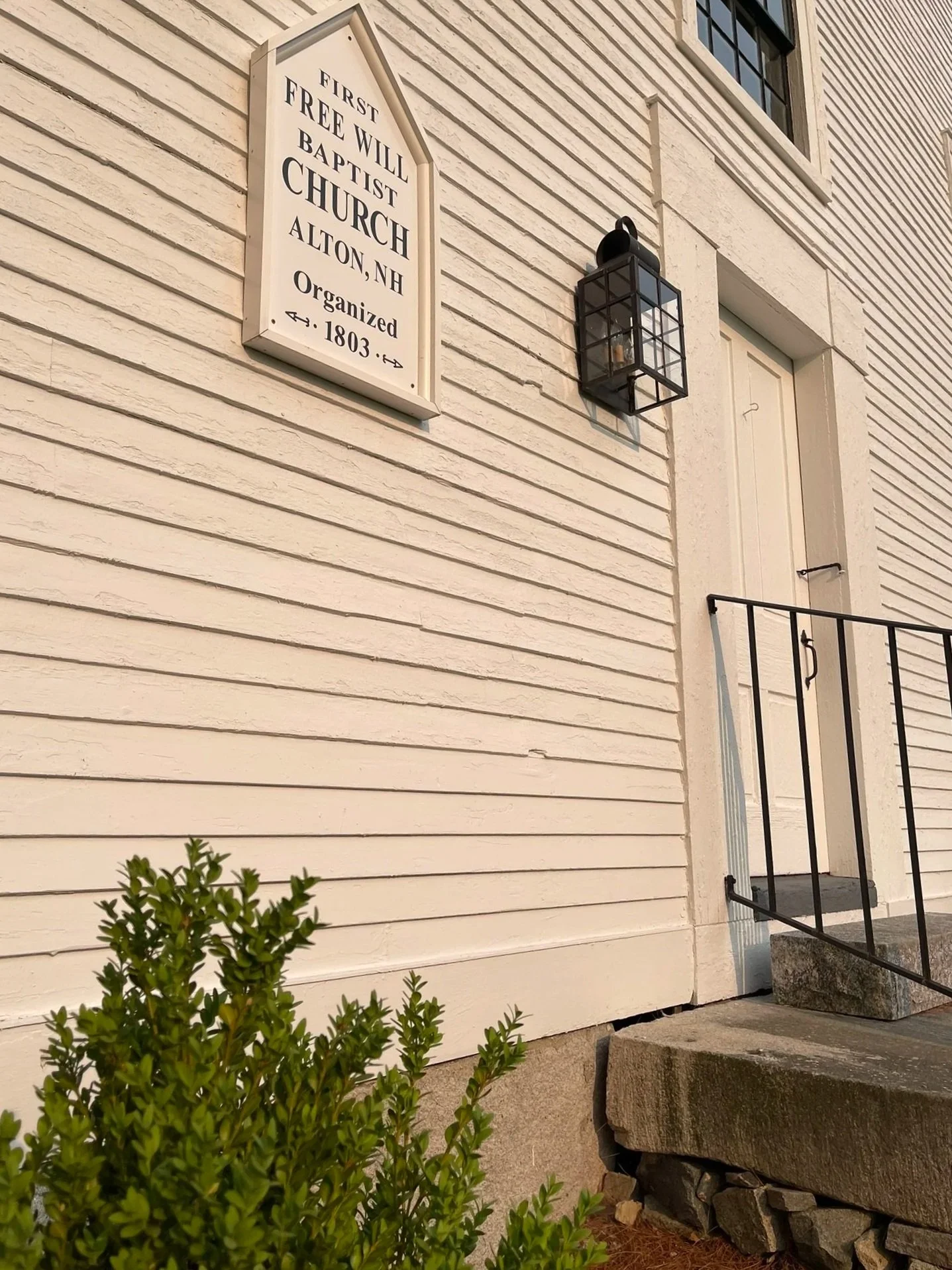
Off the beaten path in the village of East Alton at Gilman’s Corner, sits the East Alton Meeting House.
In the mid 19th century, most of the area was open fields and the Meeting House served as a beacon for steamers on the lake.
History of the EAST ALTON MEETING HOUSE
Originally built sometime between 1803 and 1820 as a meeting house for the Free Will Baptists to congregate, it would serve that purpose until 1950 when the Wolfeboro Quarterly Meeting document noted that “the old Alton church located in East Alton has but one surviving member. Services are held for a few weeks largely supported by summer visitors”. The report of 1907 read that “the church at Gilman’s Corner has become extinct.”
It is perhaps worth noting here that this was, in fact, the original settled town of Alton. It was on the road from Farmington to Wolfeboro and was a thriving community of some 300 plus people. In the mid 19th century as railroads began bringing people to what is now Alton Bay to board steamers bound for other ports on Lake Winnipesaukee, the focus shifted to a connection between the Farmington Road and Alton Bay. The current center developed along the way.
Also of interest is the fact that most of the area was open fields and the Meeting House served as a guiding beacon for steamers on the lake.
By the 1920’s the Meeting House had fallen into disrepair when a group calling themselves the Gilman’s Corner Community Club held meetings and undertook to raise funds to repair and paint the structure.
In 1978 this became the East Alton Meeting House Society incorporated as a non-profit tasked with the building’s preservation. At the same time, the building gained listing on the National Register of Historic Places. It’s history over the years holds interest for all who treasure the simple beauty of early New England structures as well as for those who enjoy contemplating the course of local events from the period following America’s “Great Awakening” to the present.
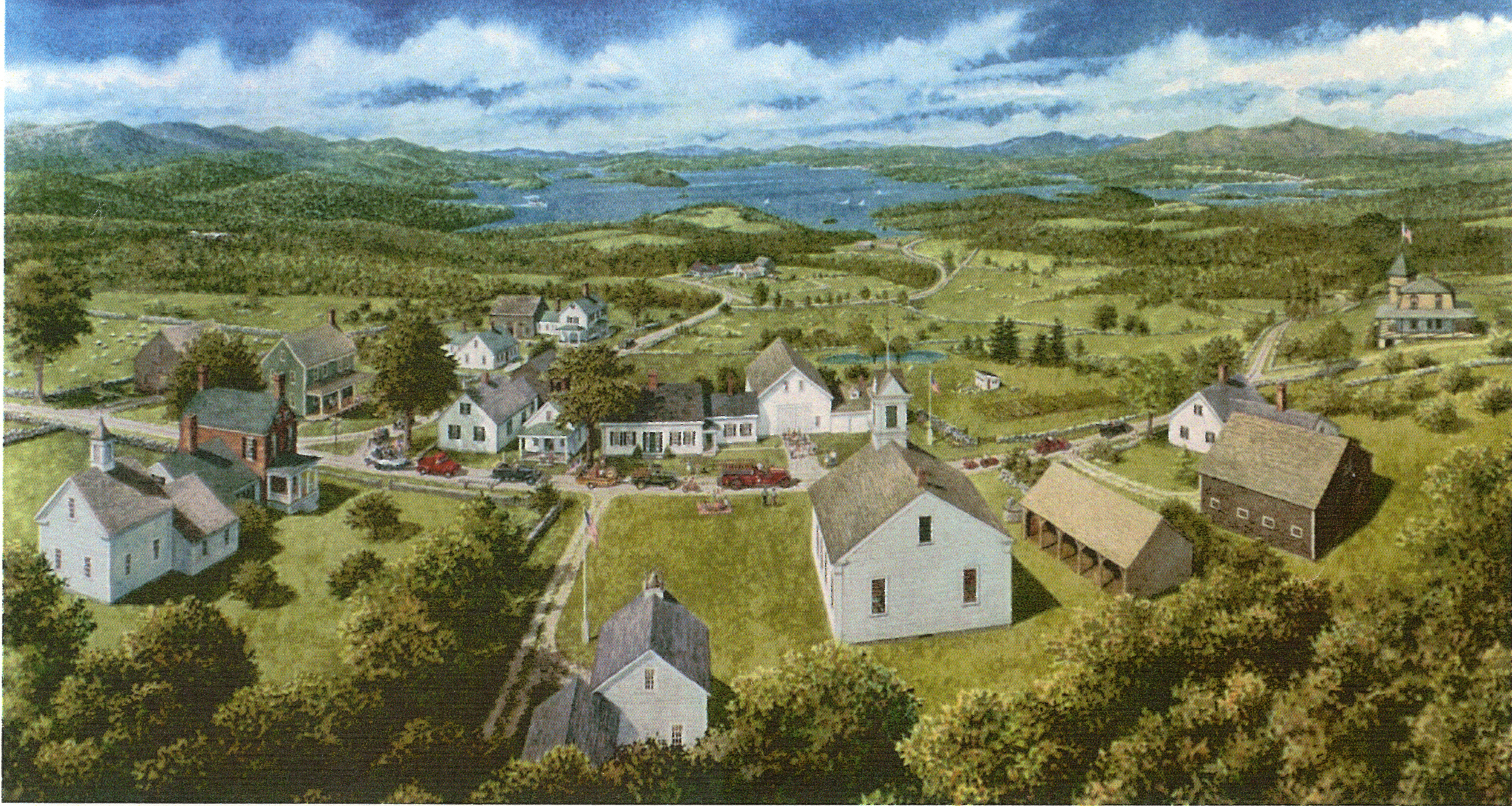
The Society was fortunate in having the late local renowned artist, Peter Ferber, render several views of the Meeting House. The above depicts the East Alton 4th of July Parade as it used to end at Gilman’s Corner.